Are you looking to visit the Amazon Rainforest? I sure was. Since childhood, I have dreamed of visiting the rainforest to see the amazing wildlife there. I wanted to spend my days seeing animals I’d only ever seen in books. I wanted to spend my nights falling asleep to the rain and bug sounds programed into my sleep machine. Additionally, I wanted to visit the place my teachers called the “lungs” of the world where a huge percentage of the world’s biodiversity lived. I wanted to have one small experience in a place that is hugely important to our world. And oh my word, it did not disappoint! If visiting the Amazon Rainforest is on your bucket list too, and you’re ready to make a trip happen, keep reading to plan your Peruvian Amazon Rainforest trip today.
Stuff In This Post
ToggleWhy Visit The Amazon In Peru?
Honestly, when I started planning my Amazon Rainforest vacation, I thought I’d be going to Brazil. However, after reading loads of travel blogs and lots of Reddit threads, I quickly realized that Peru was going to be the best place to visit the Amazon rainforest. We decided to visit the Peruvian Amazon rainforest because that is where the river starts. In Peru, you’ll see smaller rivers and tributaries that feed into the Amazon. These smaller rivers tend to be better spots to spot wildlife because the larger rivers are fast moving, and muddy so animals are less likely to visit them.
But which rainforest region in Peru is best? There are three main Amazon Rainforest regions in Peru: Iquitos, Manu and Tambopata (Puerto Maldonado). I couldn’t decide which would be best, so we visited a few. Read all about the differences in the Peruvian Amazon Rainforests below!
In a perfect world, with unlimited time and money, you’d be able to visit all three, but we know that choosing one that fits perfectly into your Peru itinerary is important so we’ve tried to give you pros and cons of each area – along with easy connections to make to your other Peru travel destinations.
Iquitos
- Pros: Actual Amazon River
- Cons: Travel Time
- Stay Options: Hostels, High End Hotels, Ecolodges, River Cruises
- Budget Options: $-$$$$
- Connects to your Peru Itinerary via: Lima only
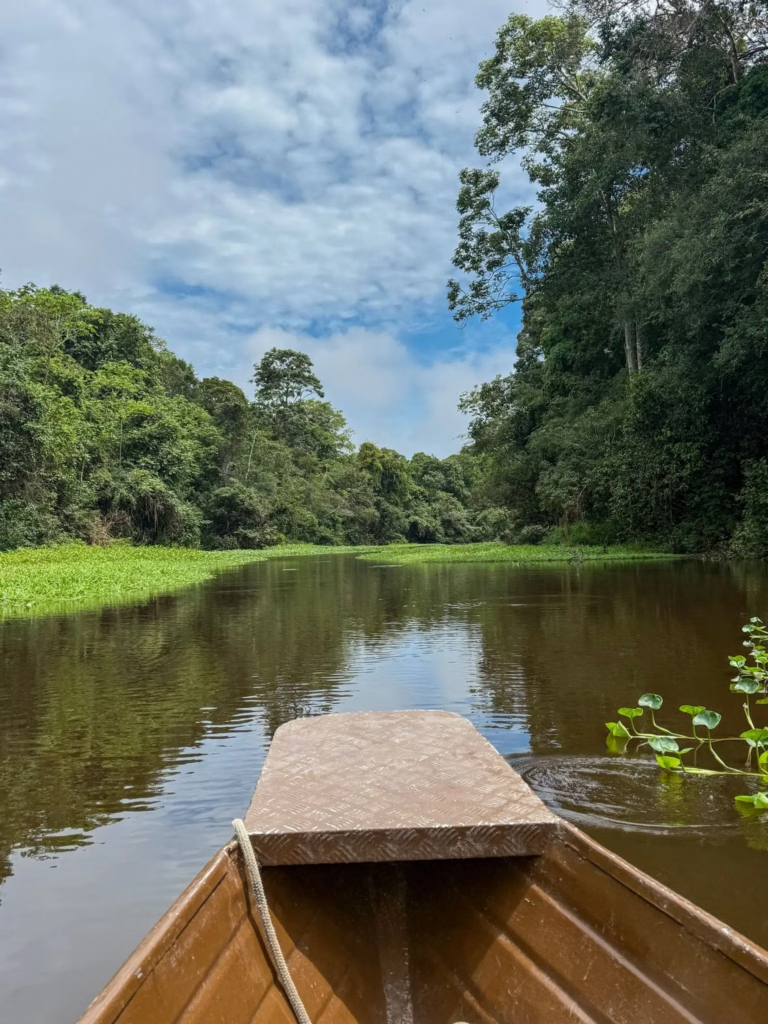
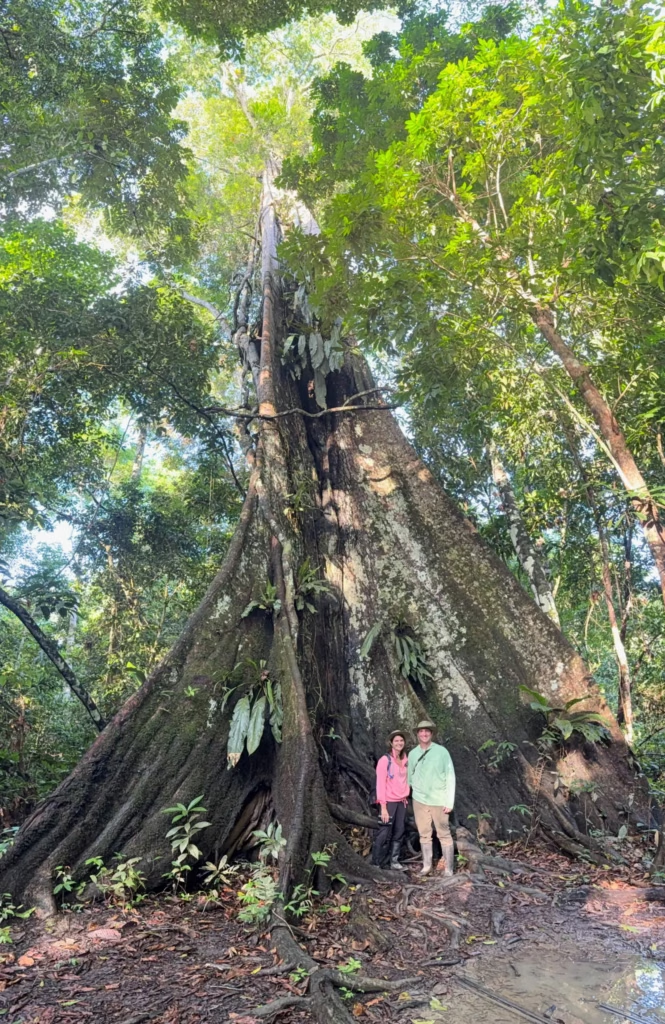
Iquitos is a busy rainforest city in northern Peru. It’s a fascinating example of a rainforest city. It can only be reached by boat or plane. However, it is home to more than 500,000 people. When we arrived, I was completely unprepared for the size of the town – it’s huge. In Iquitos, you won’t see much wildlife. However, it is a great starting point for an Amazon River cruise or an ecolodge stay. For the budget traveller, you can also stay in local hostels and take day trips to more remote wildlife regions.
Pros of Iquitos
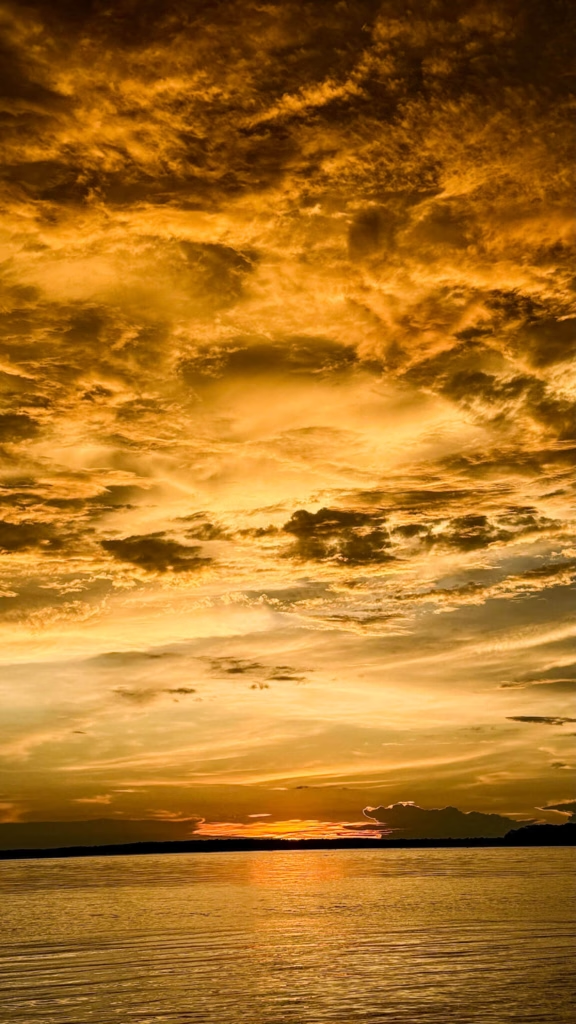
The best part of visiting Iquitos is you will be able to visit the actual Amazon River. We watched the sunset over the beginning of the named Amazon River and it brought tears to my eyes realizing my childhood dream. Plus, the Amazon River in Peru is one of the only places you’ll be able to regularly see the endangered pink dolphins.
Iquitos is also the only place you’re allowed to visit protected indigenous groups. There are some cultures that it is illegal to visit. However, other groups in the Iquitos region invite visitors to their towns to experience their traditions.
Iquitos is by far the best place to visit if you’re specifically interested in an Amazon Rainforest river cruise. There are multiple options to choose from and they are longer and easier to access than other rainforest river cruises in Peru.
In general, Iquitos is a great destinations for travelers of all budgets. You can find budget hostels, high end luxury hotels with infinity pools, ecolodges nestled deep in the rainforest and everything in between.
Cons of Iquitos
The main disadvantage of visiting Iquitos is the extensive amount of traveling you’ll have to do to get there. Flights to Iquitos only come to and from Lima, meaning you can’t easily connect to other Peru travel destinations like Machu Picchu or Lake Titicaca. Additionally, near Iquitos, you won’t see a lot of wildlife.
Manu
- Pros: Best wildlife variety
- Cons: Travel Time
- Stay Options: Ecolodges and Camping
- Budget Options: $$-$$$
- Connects to your Peru Itinerary via: Cusco only via bus
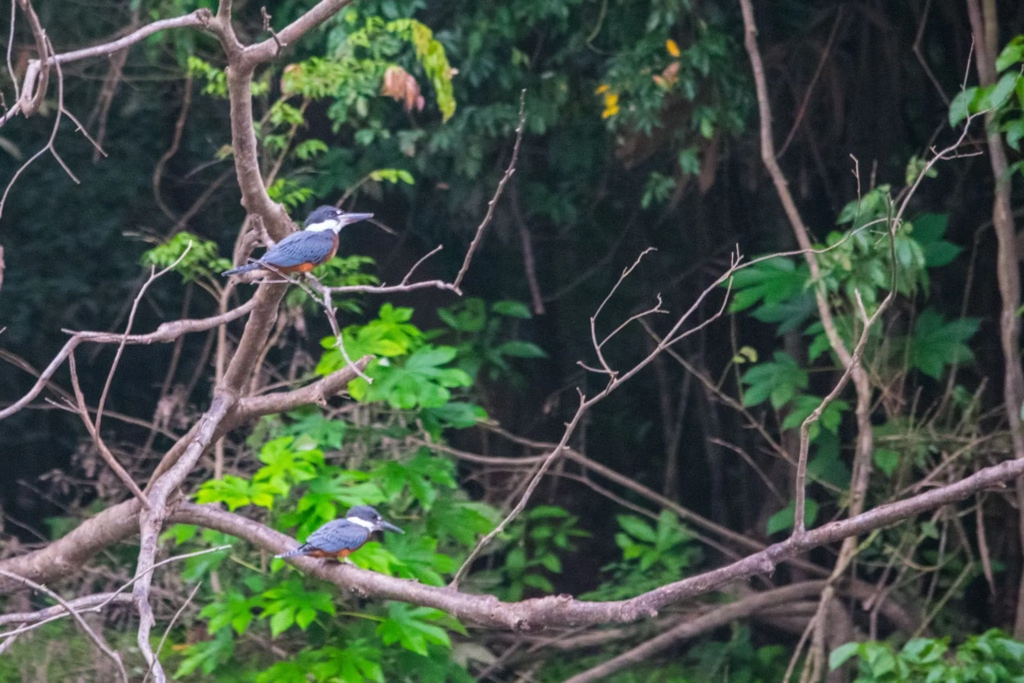
Manu National Park is a highly protect region of the Peruvian Rainforest, designated a UNESCO World Heritage site. Because of it’s remote region and highly protected and regulated area, the biodiversity and wildlife spotting in this rainforest in unparalleled, especially for those interested in the multitude of bird species. The park is divided into three regulated areas. The Reserved zone is for animals and serious researchers/photographers only. The Cultural zone is reserved for indigenous communities. The Special Use zone is reserved for educational and tourism activities – this is where you’d likely visit if you chose this rainforest.

Pros of Manu
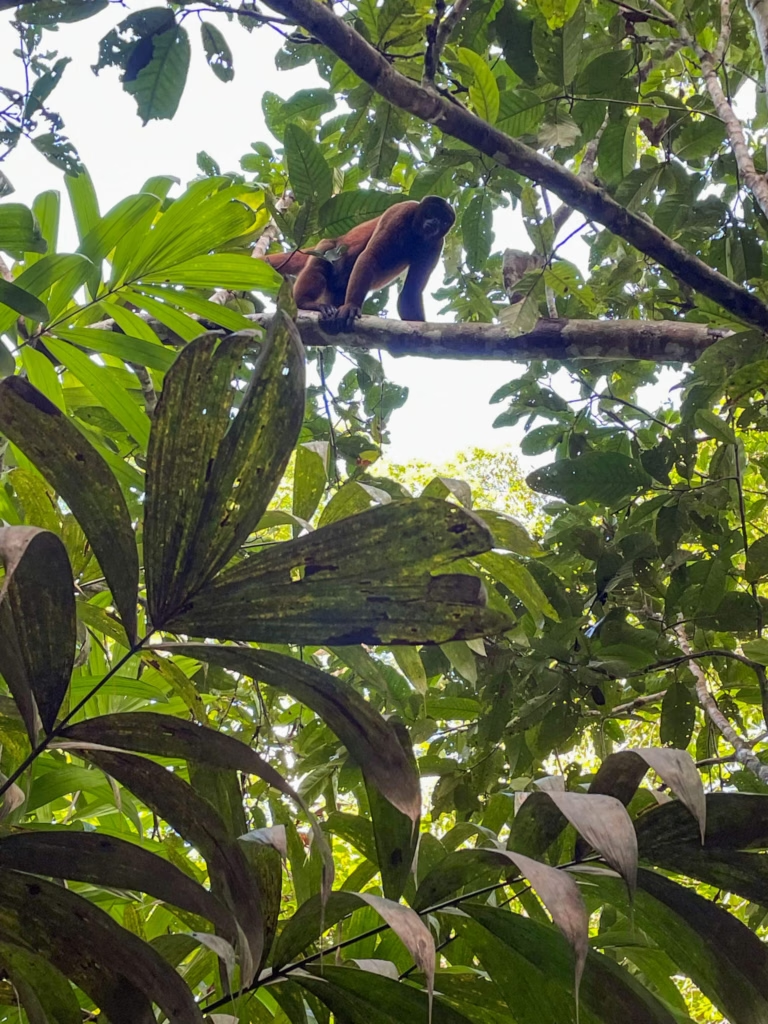
Visiting Manu National Park is perfect for serious birders and wildlife watchers with lots of time. Because of the remote nature of the area, you’re more likely to see a wide variety of wildlife here. Something that contributes to this is probably the smaller group sizes. Because it’s a more remote area, fewer people go here. Therefore, fewer people in your daily activity groups, therefore fewer people scaring off the wildlife, therefore more wildlife sightings.
Cons of Manu
You need a minimum of 3 days to visit Manu National Park. Your first day will be spent driving there from Cusco. Your final day will be spent driving back to Cusco. This turns your three day trip into one day of rainforest exploration. Because of this, we’d actually recommend a minimum of 5 days to visit the region.
Because of the remote nature of the area, accommodation options are definitely not as luxurious. Even the “glamping” here is less glam and more camping.
Overall, Manu is not recommended for first time rainforest visitors or those short on time.

Tambopata via Puerto Maldonado
- Pros: Ease of Access
- Cons: Popular Tourist Destination
- Stay Options: Hostels, High End Hotels, Ecolodges, River Cruises
- Budget Options: $-$$$$
- Connects to your Peru Itinerary via: Lima AND Cusco
The Tambopata National Reserve is a portion of the Peruvian Amazon near the Bolivian border. This region is based around the city of Puerto Maldonado – often referred to by tourists as the Puerto Maldonado rainforest. Puerto Maldonado is easy to get to via short flights from both Cusco and Lima. Once in Puerto Maldonado, you’ll explore the Madre de Dios river by boat. Popular attractions in this region are the clay licks that parrots and macaws visit and Lake Sandoval, where you have a good chance of spotting a giant river otter (we didn’t).

Pros of Puerto Maldonado
The biggest advantage to visiting Tambopata via Puerto Maldonado is how easy it is to add it in to your Peruvian itinerary. We arrived in Lima, flew to Puerto Maldonado from Lima and then went straight on to Cusco to visit Machu Picchu – no backtracking necessary and plenty of flight options. The minimal travel time meant that we were able to stay for 3 days and felt like we saw the highlights we came to see.
The Tambopata region of the Peruvian Amazon Rainforest is close to Manu and therefore has a similar level of biodiversity. It’s a great option for those looking to see a large amount of birds, like we were, without the trek to Manu!
Additionally, stays in Puerto Maldonado range from hostels in town, where you can then take daily trips into the rainforest, to far flung ecolodges with all inclusive wildlife tours. Nearer town, you’ll also find some luxury resorts with multi-course meals, infinity pools and spas.
Puerto Maldonado is our recommendation for first time visitors to the Peruvian Amazon Rainforest.

Cons of Puerto Maldonado
Honestly, there aren’t many cons here. Puerto Maldonado is a great mix of ease of access and diverse wildlife encounters. A con may be the number of tourists that visit this region means that prices may be more expensive than other regions, though you’ll also be getting luxury and convenience upgrades for that price. We do think the prices were fair and we felt like we had good value for our money.
However, if it’s important to you to see the Amazon River, you cannot do that in Puerto Maldonado. Here, you’ll be in tributaries but you won’t be on the actual Amazon River. You also won’t see the pink river dolphins.
Where To See Amazon Rainforest Animals?
We recognize that lots of people go to the Amazon Rainforest to see a specific animal. We didn’t – we just wanted to see lots of animals. However, I get it. We all have bucket list animals so I’ve listed some of the popular Amazon Rainforest animals below and then listed the places you can see them and bolded the best places to see them.
- Giant River Otter: Tambopata and Manu
- Pink River Dolphin: Iquitos
- Jaguar: Iquitos, Tambopata and Manu (no bold because they are hard to see wherever you go)
- Anaconda: Iquitos, Tambopata and Manu (no bold because they are hard to see wherever you go)
- Macaws: Manu and Tambopata
- Birds in general: Manu, Tambopata and Iquitos
- Tarantulas: Iquitos, Manu and Tambopata
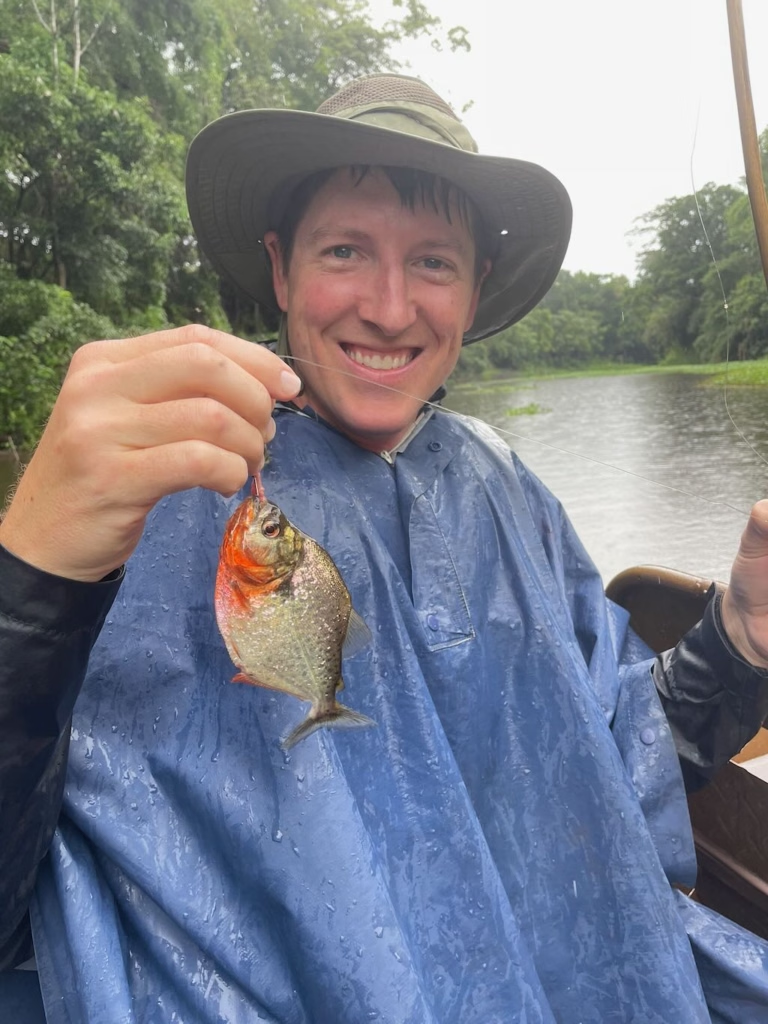
- Piranha fishing: Iquitos and Puerto Maldonado only during certain times of year
- Monkeys: Iquitos, Tambopata and Manu
- Sloths: Iquitos, Tambopata and Manu – honestly very hard to spot in the dense Amazon rainforest, consider Panama instead
- Caimans: Manu, Tambopata and Iquitos
- Tapir: Tambopata and Manu
- Capybarra: Tambopata and Manu
- Harpy Eagle: Tambopata (no bold because almost impossible to see)
Overall, if you’re looking for a large variety of wildlife with ease of travel, Tambopata is the best place to visit.
When To Visit The Peruvian Amazon?
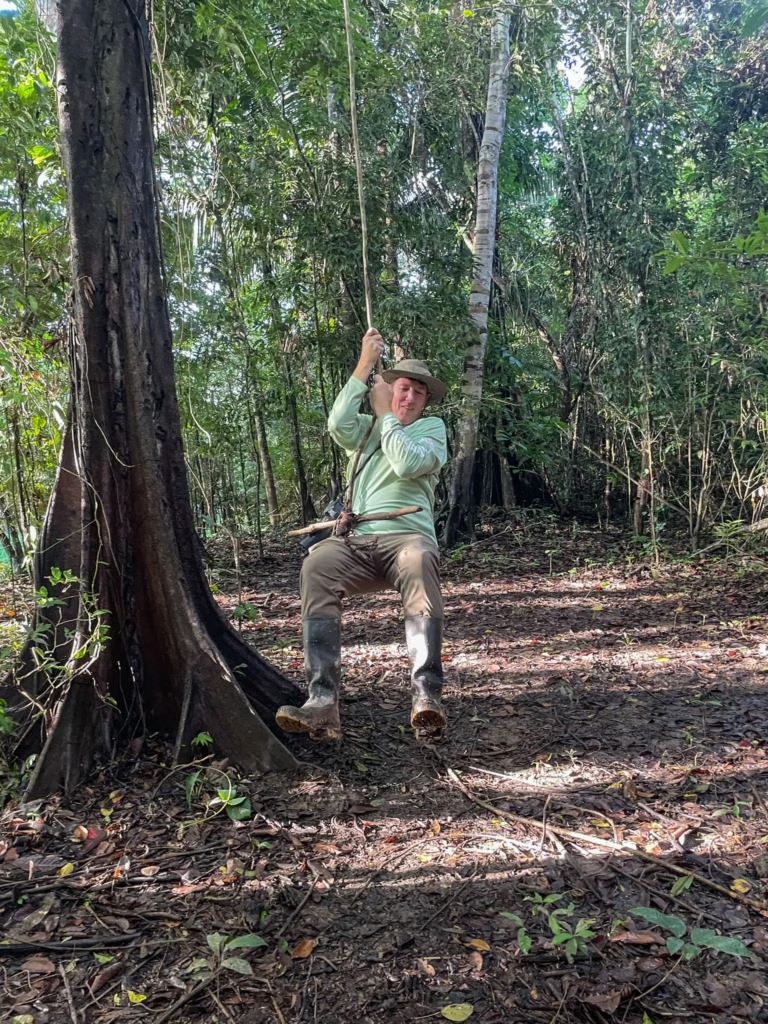
May-October is typically considered the high season for visiting the Peruvian Amazon Rainforest. This is because it is the dry season. This means the waters have receded and more land is exposed. This will allow for more jungle treks. It also increases the size of the riverbanks, which is where you spot a majority of the larger animals. While it is the “dry” season, it is by no means dry. The dry season is just less rainy than the rainy season. However, a huge plus of the dry season is less standing water means fewer mosquitos. But again, “fewer” mosquitos still means mosquitos.
During the dry season, you’ll be able to take jungle walks and likely have more large animal sightings.
The wet season, November-April, will mean increased rainfall and increased water levels. This will mean you’ll be spending more time in a boat and less time on land. You’ll also need to spot animals in trees as less riverbanks will be exposed.
Our trip to the Peruvian Amazon Rainforest was truly a bucket list adventure. I’ve never been more relaxed in my life than spending multiple days just walking around soaking in nature and trying to spot animals. If you visit any Amazon Rainforest destination with an open mind, no expectations and a sense of adventure it will be a relaxing and memorable vacation. We hope this comparison has helped you to plan your own vacation to the Amazon Rainforest. If you have any questions about the places we visited in Peru, check out our other posts here or leave a question in the comments sections below and we’d be happy to get back to you.